Blog Image

(PART 1) Creating community experiences that transcend events and genres

READY FOR OPEN AIR #1

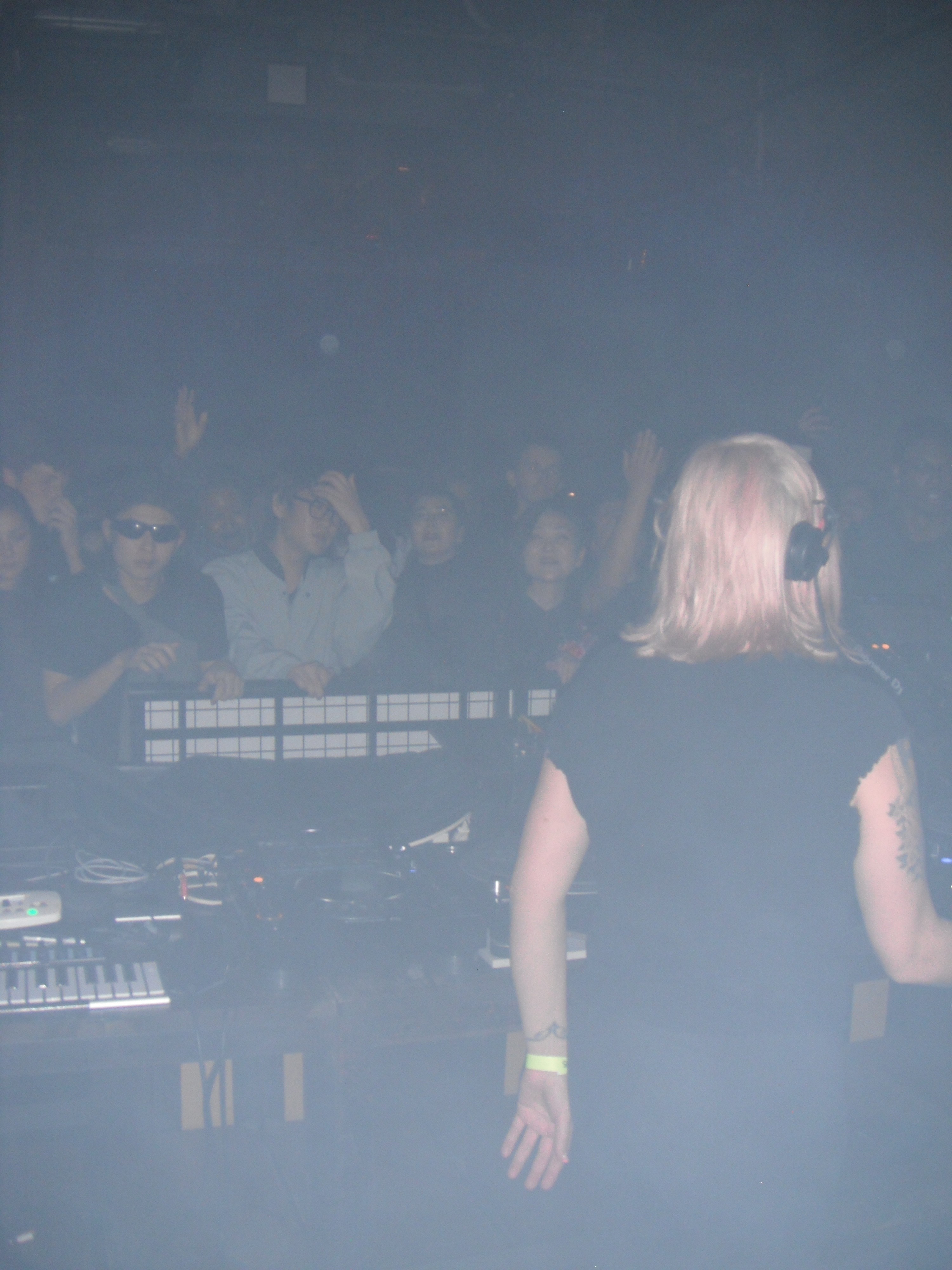
GROW THE CULTURE kicks off a candid interview series with the people behind our Tokyo-based underground dance music culture, starting with founder Hisaki (Midnight Runner) and maidable.

Event

[No. 001]
(PART 1) Creating community experiences that transcend events and genres

READY FOR OPEN AIR #1

GROW THE CULTURE is a Tokyo-based collective sharing underground dance music culture inspired by the UK sound system tradition.

Ahead of GROW THE CULTURE OPEN AIR 2026, taking place on November 7–8 this year, we’re launching a new interview series featuring people who have been part of the GROW THE CULTURE journey.

In these conversations, they speak candidly about things they rarely get to talk about at our events or on social media, from their experiences so far to what’s on their minds right now.

For the first edition, GROW THE CULTURE founder Hisaki (Midnight Runner) and maidable sit down to talk about how GTC began, reflect on the OPEN AIR events so far, share what GTC means to them, and discuss what they want to explore next.

① How GROW THE CULTURE OPEN AIR Started

Hisaki: At first, I wanted to bring Sully (Astrophonica) and Dwarde (Future Retro London / Globex Corp) over to Japan. At the time, I was getting a bit tired of club events and felt like I’d hit a wall with them, so I thought, why not try doing something outdoors? That’s when I started getting people together, reached out to maidable and others, and that eventually led to the formation of GROW THE CULTURE.

Took Sully and Dwarde to a sushi resutaurant in Asakusa. They licked the soy sauce and started yelling that it tasted like weed

maidable: Yeah, exactly. When Hisaki reached out to me, it was right in the middle of COVID, and there was this really suffocating atmosphere, not just in the club scene, but across society as a whole. I remember meeting Hisaki at a time when I wanted to break out of that somehow, but didn’t really know how.

Hisaki: We’d both been into drum and bass for a long time, so we’d been crossing paths at D&B events and stuff for years. But we’d never really had a proper conversation.

maidable: It was more like a series of near misses (laughs). A classic club scene thing. We started properly connecting around 2021.

Hisaki: And then the first one happened in 2022. We met around 2021 and started preparing the event together. But neither of us really knew anything about putting on a rave, so we were basically figuring everything out as we went.

maidable: The first one was absolutely chaotic. I especially remember just standing there completely lost during the pack-down. It was probably the first time I’d experienced something like that as an adult (laughs).

Hisaki: It was seriously brutal. Like, “Wait, we’re actually the ones who have to pack all this equipment away?” (laughs)

maidable: But the experience we got from it was so much greater than all of that. It made me realize that this was something we should keep doing.

Hisaki: At that time, I had this sense that I could do anything by myself. I was probably getting a little carried away with that idea. So it was a really valuable experience that made me realize, “Actually, there’s only so much you can do on your own.” GTC also made me want to learn more about team building and teamwork.

maidable: Yeah, exactly. Even now that we’re a 4 person team, I’m constantly reminded of how important it is to work together.

Hisaki: I was running around for about 30 hours, doing almost everything myself—patrolling the site, managing the entrance, communicating with everyone involved, and so on. It was obviously impossible to keep that up. And I was DJing as well.

maidable: Yes, that happened (laughs). Your eyes were completely bloodshot towards the end. I think that was also the first time I’d really experienced having to push my body to its absolute limit.

Hisaki: I think we finished the pack-down around 6 PM, and I finally got home around 10. I ended up sleeping for something like 18 hours. I went to sleep at night and woke up at night.

maidable: But despite all that, we managed to finish the first edition. From there, we gradually expanded from outdoor parties into the TAKEOVER series at clubs, launching the label, selling merchandise, and so on. I think our identity as a collective gradually became much stronger.

5 Years of GROW THE CULTURE, held in February 2026 at CIRCUS TOKYO, featuring G Version III, Sumo Jungle (Soichi Terada), Mantra, and Nectax.

Hisaki: One thing maidable and I have always shared is the belief that the local scene is the most important thing. With that as our foundation, we started developing a vision of building a stronger foundation for the scene from Tokyo—while also developing the label and expanding what we do as a collective.

maidable: I think parties are somewhat transient by nature. Unless you keep putting them on consistently, their impact and momentum can gradually fade. That’s why I feel it’s important to build a stronger foundation for the underground scene through a variety of activities beyond just parties.

① How GROW THE CULTURE OPEN AIR Started

Hisaki: At first, I wanted to bring Sully (Astrophonica) and Dwarde (Future Retro London / Globex Corp) over to Japan. At the time, I was getting a bit tired of club events and felt like I’d hit a wall with them, so I thought, why not try doing something outdoors? That’s when I started getting people together, reached out to maidable and others, and that eventually led to the formation of GROW THE CULTURE.

Took Sully and Dwarde to a sushi resutaurant in Asakusa. They licked the soy sauce and started yelling that it tasted like weed

maidable: Yeah, exactly. When Hisaki reached out to me, it was right in the middle of COVID, and there was this really suffocating atmosphere, not just in the club scene, but across society as a whole. I remember meeting Hisaki at a time when I wanted to break out of that somehow, but didn’t really know how.

Hisaki: We’d both been into drum and bass for a long time, so we’d been crossing paths at D&B events and stuff for years. But we’d never really had a proper conversation.

maidable: It was more like a series of near misses (laughs). A classic club scene thing. We started properly connecting around 2021.

Hisaki: And then the first one happened in 2022. We met around 2021 and started preparing the event together. But neither of us really knew anything about putting on a rave, so we were basically figuring everything out as we went.

maidable: The first one was absolutely chaotic. I especially remember just standing there completely lost during the pack-down. It was probably the first time I’d experienced something like that as an adult (laughs).

Hisaki: It was seriously brutal. Like, “Wait, we’re actually the ones who have to pack all this equipment away?” (laughs)

maidable: But the experience we got from it was so much greater than all of that. It made me realize that this was something we should keep doing.

Hisaki: At that time, I had this sense that I could do anything by myself. I was probably getting a little carried away with that idea. So it was a really valuable experience that made me realize, “Actually, there’s only so much you can do on your own.” GTC also made me want to learn more about team building and teamwork.

maidable: Yeah, exactly. Even now that we’re a 4 person team, I’m constantly reminded of how important it is to work together.

Hisaki: I was running around for about 30 hours, doing almost everything myself—patrolling the site, managing the entrance, communicating with everyone involved, and so on. It was obviously impossible to keep that up. And I was DJing as well.

maidable: Yes, that happened (laughs). Your eyes were completely bloodshot towards the end. I think that was also the first time I’d really experienced having to push my body to its absolute limit.

Hisaki: I think we finished the pack-down around 6 PM, and I finally got home around 10. I ended up sleeping for something like 18 hours. I went to sleep at night and woke up at night.

maidable: But despite all that, we managed to finish the first edition. From there, we gradually expanded from outdoor parties into the TAKEOVER series at clubs, launching the label, selling merchandise, and so on. I think our identity as a collective gradually became much stronger.

5 Years of GROW THE CULTURE, held in February 2026 at CIRCUS TOKYO, featuring G Version III, Sumo Jungle (Soichi Terada), Mantra, and Nectax.

Hisaki: One thing maidable and I have always shared is the belief that the local scene is the most important thing. With that as our foundation, we started developing a vision of building a stronger foundation for the scene from Tokyo—while also developing the label and expanding what we do as a collective.

maidable: I think parties are somewhat transient by nature. Unless you keep putting them on consistently, their impact and momentum can gradually fade. That’s why I feel it’s important to build a stronger foundation for the underground scene through a variety of activities beyond just parties.

② Why We Do GROW THE CULTURE OPEN AIR

Hisaki: There aren’t really many DIY outdoor events in Japan that are rooted in bass music or inspired by UK sound system culture. So I want to keep doing this for as long as we can, partly because I think it’s a pretty unique thing to have here. And honestly, I’d love to see other people try doing something similar, too.

maidable: Like the name “OPEN AIR” suggests, there are still a lot of people in Japan who aren’t that familiar with this kind of event. But I think that’s exactly what makes it interesting. Compared to a club event, there are so many more possibilities. Being able to build things yourself and enjoy that DIY process is one of them.

Hisaki: At festivals like Outlook Origins, the Croatian bass music festival, you look around and think, “Everyone’s here!” (laughs). I’d love for GTC to become something like that, while still surprising people every year. I want to keep finding ways to express what makes Tokyo unique.

maidable: Exactly! Ultimately, what would make me happiest is reaching a point where all the artists are there…and, ideally, all the people in the crowd too.

Hisaki: Like going to a shrine for New Year’s you know, the kind of thing where everyone just goes, no questions asked.

maidable: New Year’s shrine visits might be a bit of an exaggeration (laughs), but yeah, that’s the kind of ambition I want us to have. I’d love for GTC to become an icon of Tokyo’s underground scene.

Hisaki: In that sense, our priority has always been the people in Japan who genuinely love this kind of underground music. We still go to events ourselves as punters, and we’ve always been consistent about putting together lineups with a real focus on authenticity. That hasn’t changed since the very beginning.

maidable: Even among parties that are focused on bass music, we try to keep things as flat and open as possible, without being too tied to any particular scene, circle, or background. I think that’s important to us. Ideally, international artists should feel like they naturally belong within the lineup, rather than standing out simply because they’re from overseas. I’d be happy if that sense of openness comes across to the audience, too.

The full lineup for Outlook Origins, held from July 23–27, 2026. From Japan, Stones Taro, who will also be playing at this year’s GTC OPEN AIR, and UKD, who played last year, appeared as Double Clapperz.

Hisaki: At festivals like Outlook Origins, the Croatian bass music festival, you look around and think, “Everyone’s here!” (laughs). I’d love for GTC to become something like that, while still surprising people every year. I want to keep finding ways to express what makes Tokyo unique.

maidable: Exactly! Ultimately, what would make me happiest is reaching a point where all the artists are there…and, ideally, all the people in the crowd too.

Hisaki: Like going to a shrine for New Year’s you know, the kind of thing where everyone just goes, no questions asked.

maidable: New Year’s shrine visits might be a bit of an exaggeration (laughs), but yeah, that’s the kind of ambition I want us to have. I’d love for GTC to become an icon of Tokyo’s underground scene.

Hisaki: In that sense, our priority has always been the people in Japan who genuinely love this kind of underground music. We still go to events ourselves as punters, and we’ve always been consistent about putting together lineups with a real focus on authenticity. That hasn’t changed since the very beginning.

maidable: Even among parties that are focused on bass music, we try to keep things as flat and open as possible, without being too tied to any particular scene, circle, or background. I think that’s important to us. Ideally, international artists should feel like they naturally belong within the lineup, rather than standing out simply because they’re from overseas. I’d be happy if that sense of openness comes across to the audience, too.

The full lineup for Outlook Origins, held from July 23–27, 2026. From Japan, Stones Taro, who will also be playing at this year’s GTC OPEN AIR, and UKD, who played last year, appeared as Double Clapperz.

Hisaki: I think our lineups are pretty unique every year. Compared to when we first started, we’ve got a much more established team and structure now, so recently we’ve been able to properly give a platform to artists who are really making moves right now, as well as younger artists.

maidable: Definitely. I feel like the lineup has become much deeper and more diverse. And I think this year’s fourth edition has the best balance so far between unexpected choices and names that just make sense.

Hisaki: There are still so many people I’d love to bring over. But we basically keep everyone’s set between one and one and a half hours. I’m not really into shortening everyone’s set just to squeeze more artists in. So it’s more about figuring out how to build the best lineup with those limited 16 slots.

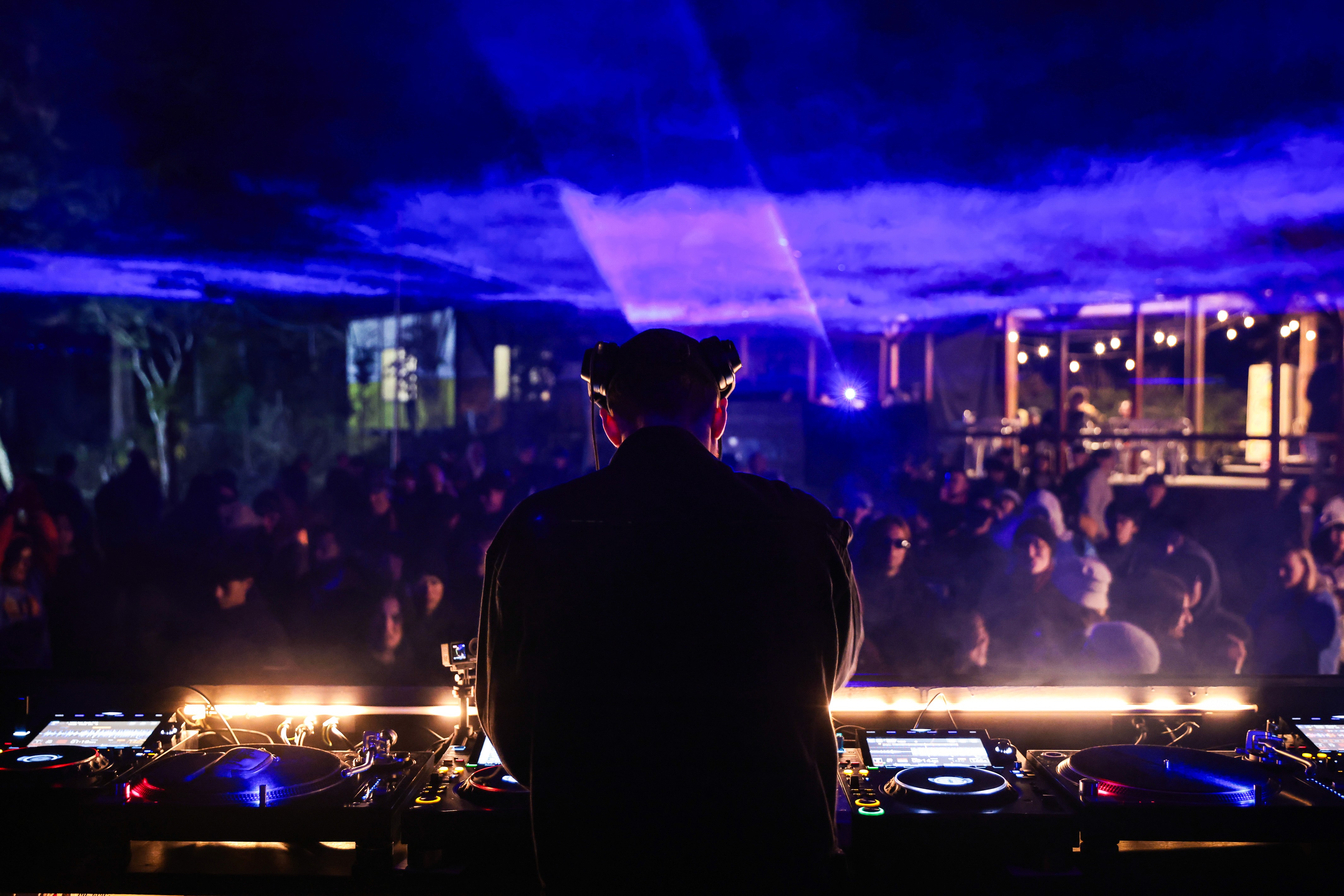
maidable: We could make the venue bigger, bring in more artists, and run it over several days. That’s definitely an option. But for where we are right now, I think this scale feels right. One stage running for 20 hours, with the VOID sound system and all these DIY elements throughout the site, that feels very true to who we are.
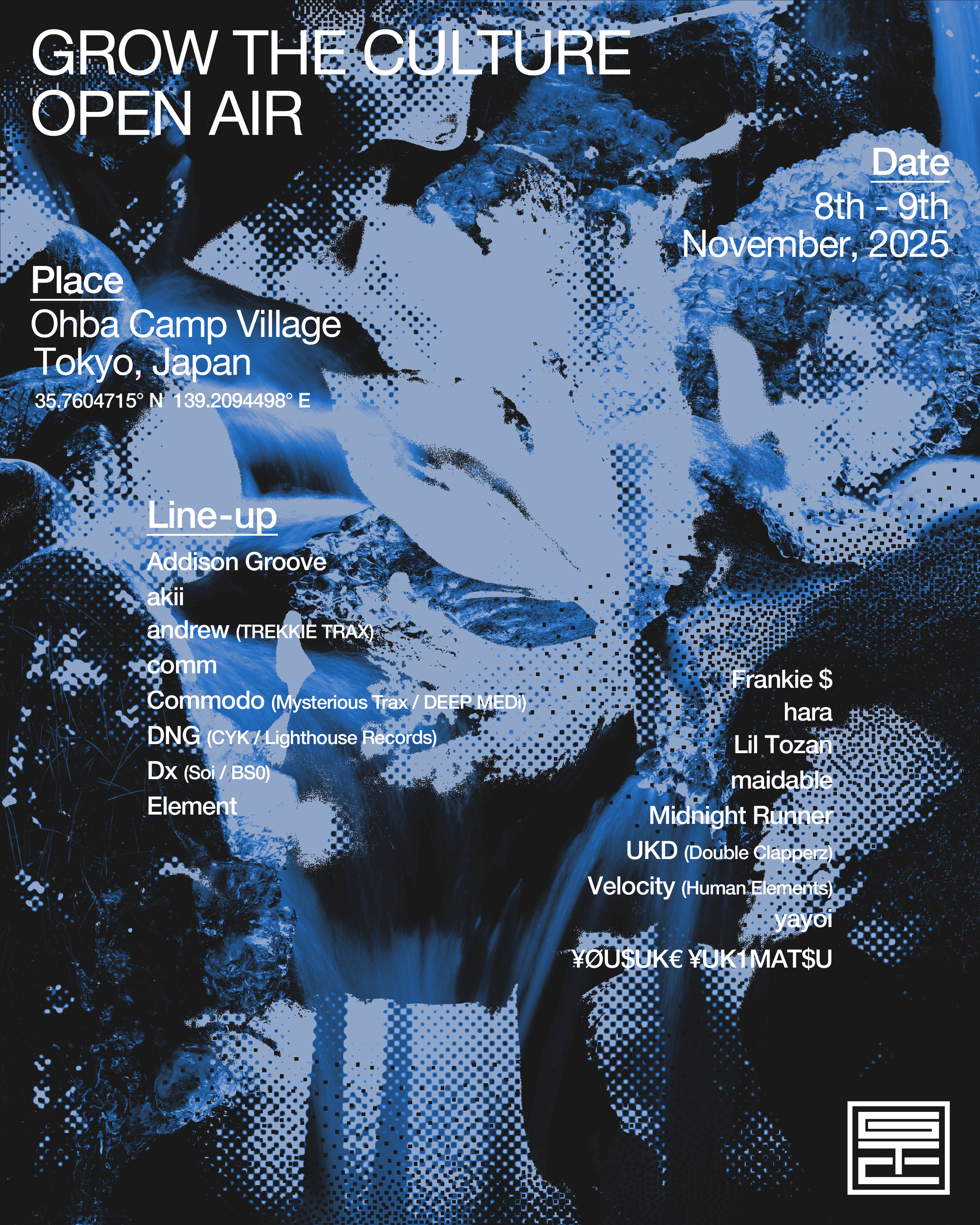
Hisaki: Even at this scale, around 300 to 400 people—there still aren’t many events like this in Japan, as I said earlier. So it would be great if GTC could become a stage that people look up to, or even something they aspire to be part of. Although we don’t really think of ourselves as providing some kind of “big stage.”

maidable: It goes back to what we said earlier about becoming an icon of Tokyo’s underground scene. But that doesn’t mean becoming some untouchable or elevated institution. Culture is something everyone involved creates together. That’s also what’s behind the name GROW THE CULTURE. I want us to keep that in mind going forward.

Hisaki: Ray Keith once said something like, “No matter how cool a DJ is, once they step outside the club, they’re just another person.” In that sense, I want us to stay committed to creating one community without putting up unnecessary barriers between people.

Ray Keith:

“You might be somebody inside the club, but the moment you step outside, you’re nobody. Remember that.”

Ray Keith:

“You might be somebody inside the club, but the moment you step outside, you’re nobody. Remember that.”

maidable: That’s a good way of putting it. There were definitely times when being in a kind of alternative, almost non-everyday environment like a club made us feel like we were somehow special. Especially when we were in our early twenties and had that invincible feeling (laughs). But now I really relate to what Ray Keith said.

Hisaki: Everyone might DJ, make music, or be into this kind of music, but during the day they’re just going to work like everyone else. And our audience is making a conscious decision to spend an entire night at our event despite how busy their lives are. The Tokyo scene is obviously much smaller than what you have in Europe, so I think our immediate goal is to figure out how to connect with the people who make the effort to come out, what kind of experience we can give them, and how we can build an original community together. To move beyond all these different categories and eventually become an icon in our own right.

maidable: I feel like a truly flat community can only emerge once those social labels and categories are stripped away. I want GTC to be both a place where that can happen and a foundation for it.

Hisaki: That’s why having one stage at an outdoor event works so well. We’re running for 20 hours straight, and it’s cold in early November, so everyone there shares the same challenges. There’s this feeling that you have to stick together to get through it. And because there’s a clear finish line—the end of the event—you can push yourself to keep going.

maidable: Compared to events in the city, it’s a little more thrilling, in a way. I think that environment actually creates a stronger sense of togetherness, and makes it the kind of experience that stays with you long after the event is over.

Hisaki: Although, to be honest, we only hold it in November because I hate the heat. The first one was at the end of November, and that was way too cold. Frankie $ was wearing a short-sleeved shirt though.

maidable: (Laughs.) We moved it to early November last year, and I think it’s actually the perfect timing. There’s less chance of typhoons, and the temperature usually isn’t too extreme.

Hisaki: It’s that perfect time of year where you’re not too cold once you’re moving, but you’re freezing if you’re standing still. So I want to keep the vibe of, “Dance or die!” (laughs). Anyway, I guess I got a little off track there, but that’s basically it.

③ What’s Next for GROW THE CULTURE

Hisaki: Something I’ve been talking about a lot lately is that I want GTC to create its own physical space.

maidable: There’s always a certain distance between everyday life and the things we do outside of it. I think we need somewhere that can bridge that gap—a kind of meeting point between the two. There are already a few places like that around us.

Hisaki: Seoul Community Radio and VISLA.FM in Seoul were really close to what I’d like to do. I want to think of clubs, bars, restaurants, and cafés as part of the infrastructure of a city, while also creating a community space where all kinds of people can come together.

1. Seoul Community Radio | 2. VISLA.FM. There is a small DJ bar space called QUEST on the second floor.

1. Seoul Community Radio | 2. VISLA.FM. There is a small DJ bar space called QUEST on the second floor.

maidable: In Tokyo, places like TONER. Aoki Takamasa oversees the sound system there, and artists we’ve worked with and are close to, like Albino Sound and 1TA (Riddim Chango), also DJ there. They also occasionally host events that are more focused on talks and discussions, which I think makes it a really interesting space.

TONER is a venue located a seven-minute walk from Gotanda or Fudomae Station, along the Meguro River. Operating as a café, bar, and restaurant, it also hosts music events and talk shows.


TONER is a venue located a seven-minute walk from Gotanda or Fudomae Station, along the Meguro River. Operating as a café, bar, and restaurant, it also hosts music events and talk shows.


Hisaki: I’d also like to try running a shared studio for producers. There are so many things we want to do with GTC going forward. With all of that in mind, our immediate vision is to establish "GTC as a lifestyle brand centered around dance music."

maidable: I like the idea of a lifestyle brand. It feels like moving one layer beyond the “collective” framework we’ve had up until now.

Hisaki: Maison Kitsuné is a great example. They started as a music label called Kitsuné, then expanded into clothing, cafés, and all kinds of other things. That’s exactly the kind of direction I’d like to take GTC in eventually.

Maison Kitsuné was founded in Paris in 2002 by Gildas Loaëc, who had been running a record shop, and Masaya Kuroki, who had studied architecture in Paris. It began as a music label called “Kitsuné” before expanding into fashion in 2005. In 2013, the brand opened its first Café Kitsuné in Aoyama, Tokyo.

Maison Kitsuné was founded in Paris in 2002 by Gildas Loaëc, who had been running a record shop, and Masaya Kuroki, who had studied architecture in Paris. It began as a music label called “Kitsuné” before expanding into fashion in 2005. In 2013, the brand opened its first Café Kitsuné in Aoyama, Tokyo.

(To be continued)

GROW THE CULTURE

Underground dance music label and collective based in Tokyo, established in 2021. Inspired by UK soundsystem culture.

Copyright © 2026 GROW THE CULTURE.

All Rights Reserved.

GROW THE CULTURE

Underground dance music label and collective based in Tokyo, established in 2021. Inspired by UK soundsystem culture.

Copyright © 2026 GROW THE CULTURE.

All Rights Reserved.